
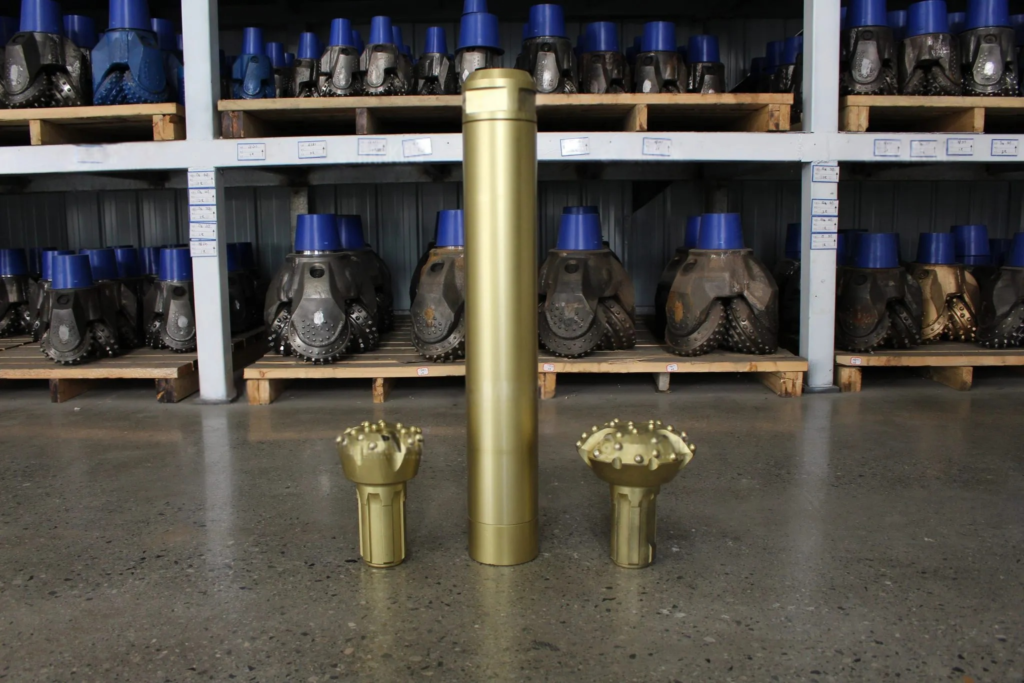
A DTH bit is the last 300 mm of the drilling system, but it takes the blame for everything upstream. Impact energy comes from the piston, hole cleaning comes from air volume, and the bit’s only job is to put that energy into rock without wearing itself out. Change the compressor and the same bit behaves like a different tool.
Start with the air package, not the bit
Two numbers decide which family of bit you can run: pressure and volume. Low-pressure hammers work at roughly 5–7 bar (70–100 psi); high-pressure hammers at 10–25 bar (145–360 psi). Below the hammer’s rated pressure the piston loses energy and the bit stops clearing the face. Above it, penetration improves until the hammer, the bit or the rig becomes the limit.
Volume has to rise with hole diameter. These are starting points for high-pressure air, not a substitute for the hammer chart:
| Hole diameter | Air volume | Typical hammer |
|---|---|---|
| 90–115 mm | 5–8 m³/min | 3–4 in |
| 130–165 mm | 9–14 m³/min | 4–6 in |
| 200–250 mm | 16–24 m³/min | 6–8 in |
| 300–400 mm | 25–38 m³/min | 8–12 in |
If the compressor cannot hold that number at the hammer, the bit will drill a hole full of its own cuttings and the buttons will polish instead of break rock. Adding pressure without volume does not fix a dirty hole.
Read the rock before the catalogue
Hardness decides the button shape and face angle; abrasiveness decides gauge protection and carbide grade; structure decides how much body the bit needs. Those three answers matter more than the name on the box.
Quartzite, granite and hard sandstone are abrasive. Spherical buttons, a flat face and a full ring of gauge buttons hold diameter longest. Limestone and shale are softer and often sticky: ballistic or parabolic buttons cut faster, provided the face can clear fines. Broken, interbedded ground punishes the body more than the buttons — a heavy shoulder and protected gauge survive where an aggressive face cracks.
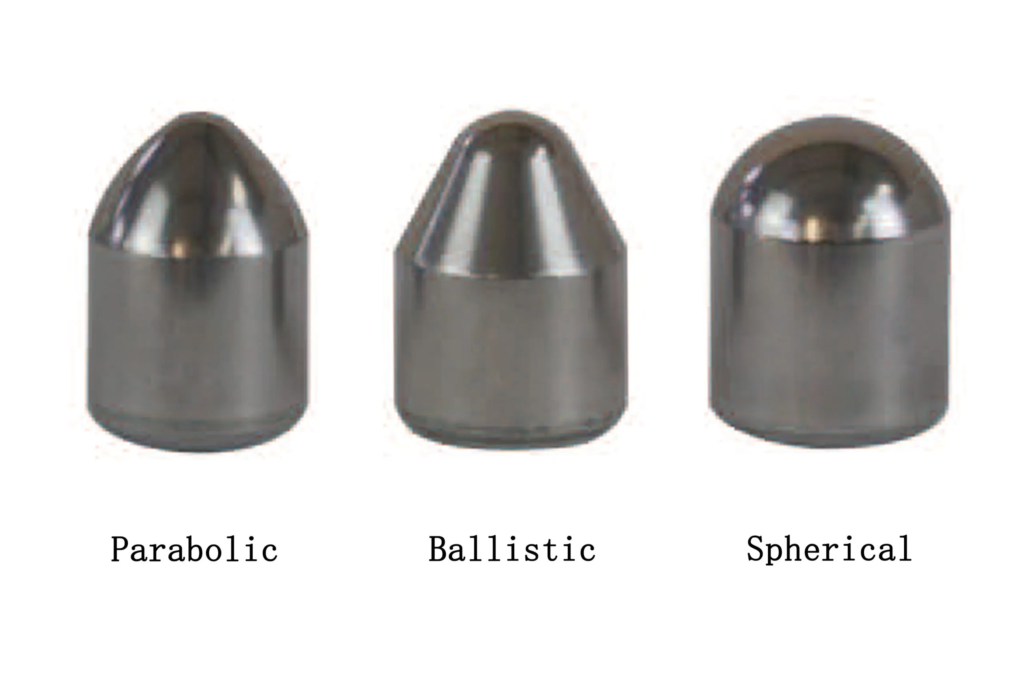
Button shape and face geometry
Button geometry is a compromise between penetration and wear. There is no universal button.
| Button shape | Best ground | Trade-off |
|---|---|---|
| Spherical | Hard, abrasive rock | Slower in soft ground |
| Ballistic | Soft to medium rock | Wears quickly in abrasive rock |
| Parabolic | Mixed ground | Neither fastest nor longest lasting |
| Conical | Hard, broken ground | Strong but slow |
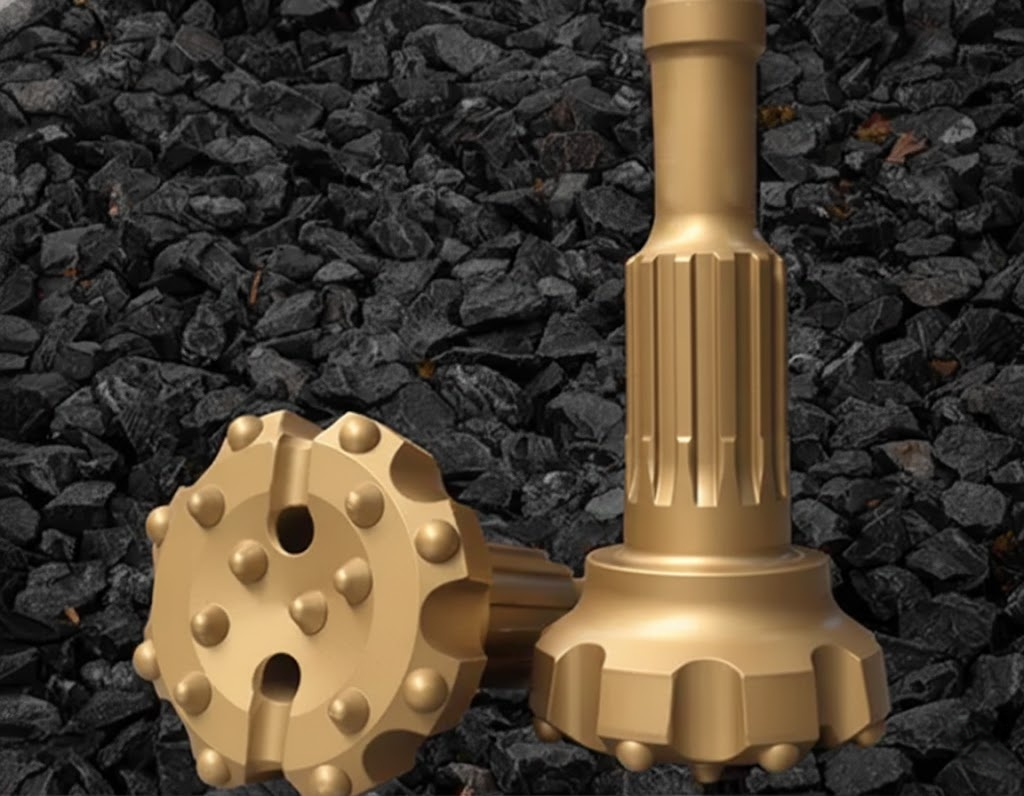
The face matters as much as the buttons. A flat face is stable and holds gauge; a drop-centre face clears cuttings in soft, wet ground; a concave face centralises the bit in broken ground. A bit that suits the hammer but not the face will drill crooked or ball.
Flushing and body details
Flushing holes should point at the face, not at the hole wall. Two large tubes clear sticky, wet cuttings better than four small holes; four holes suit dry, friable rock where the cuttings are already small. Check the foot valve, the splines and the shank against the hammer before the bit goes down. A worn shank loses impact energy before the bit ever touches rock.
Water in the hole
Water changes the specification. A dry hole can run a bit with four flushing holes; a wet hole needs larger passages and a hammer with a check valve that survives backflow. In heavy water, foam or a different method may be cheaper than forcing air through a column of water.
Diameter, casing and wear
DTH bits are made to nominal diameter with a small negative tolerance, because a bit that drills over size cannot be pulled back through casing. In casing work a hole 1–2 mm under nominal is enough to stop a string; in blast holes the same wear is irrelevant. Measure the gauge of a used bit before it goes back in the hole and keep casing bits separate from production bits.
Field checklist
- Pressure and volume measured at the hammer, not at the gauge on the deck.
- Hammer rated for the bit shank and the hole size.
- Button shape matched to the dominant rock, not the average.
- Gauge ring intact; no missing or flat buttons.
- Flushing holes clear and aimed at the face.
- Bit diameter checked against casing drift.
- Rotation speed and feed matched to the hammer, not to the last hole.
We supply DTH bits for low-pressure and high-pressure hammers, and the hammers to match. Send the hole diameter, rock type and compressor output and we will quote the bit and the air package together rather than the bit alone.
Send your hole size, formation and rig details — we reply within 6 hours on working days.
Need Help Choosing?
Send your hole size, formation and rig details — we reply within 6 hours on working days.
Read More
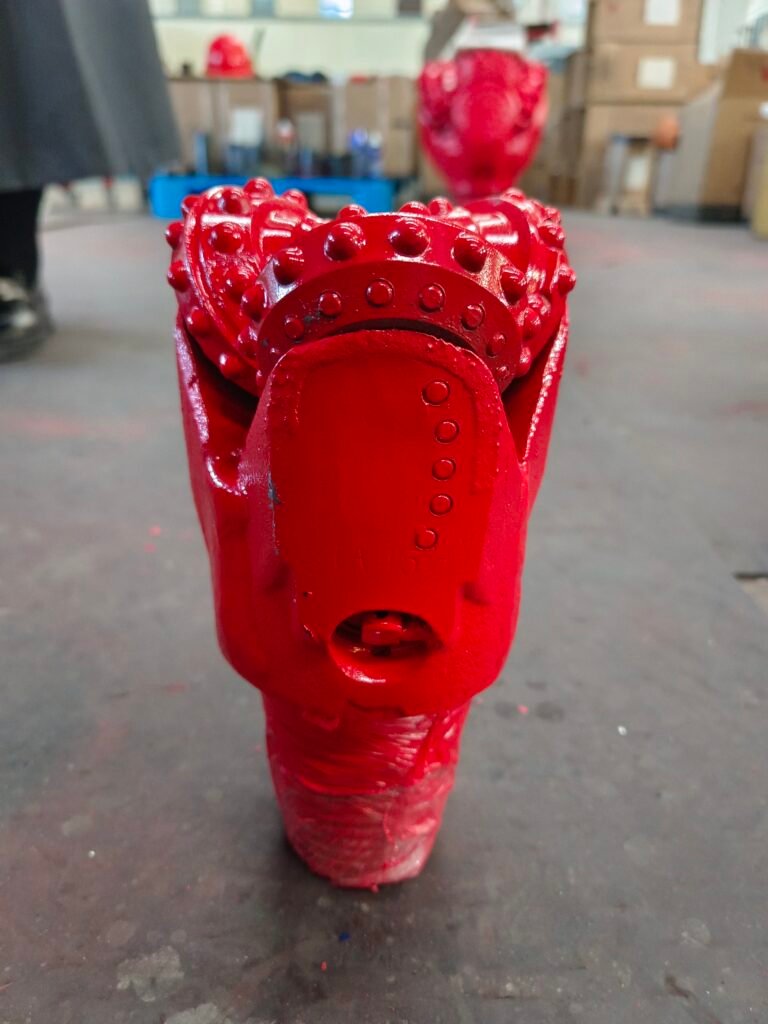
Why Tricone Bit Bearings Fail (and How to Prevent It)
Most tricone bits fail at the bearing, not the teeth. Four failure modes, what the pulled bit tells you, and t...
Read More →
PDC vs Tricone Bits: Which One Should You Run?
PDC cuts faster, tricone survives tougher ground. A practical comparison of cutting action, cost per metre and...
Read More →
How to Choose the Right IADC Code for Tricone Bits
IADC codes define formation, cutting structure and bearing. Read the three digits correctly and spec the right...
Read More →