
Hydraulics are the cheapest horsepower on the rig. The right nozzles clean the face, cool the cutters and lift cuttings; the wrong ones ball the bit, erode the body or leave a ring of cuttings around the BHA. The calculation is simple and worth doing before the bit goes down.
The three numbers
Flow rate (Q), total flow area (TFA) and hydraulic horsepower per square inch (HSI) describe the system. Nozzle size sets TFA; the pump sets Q; together they set the pressure drop and the power delivered at the bit.
TFA is the sum of the nozzle areas: TFA = n × π/4 × (d/32)², with d in 32nds of an inch.
| Nozzle (32nds) | Area per nozzle (in²) |
|---|---|
| 10 | 0.0767 |
| 11 | 0.0928 |
| 12 | 0.1104 |
| 13 | 0.1296 |
| 14 | 0.1503 |
| 16 | 0.1963 |
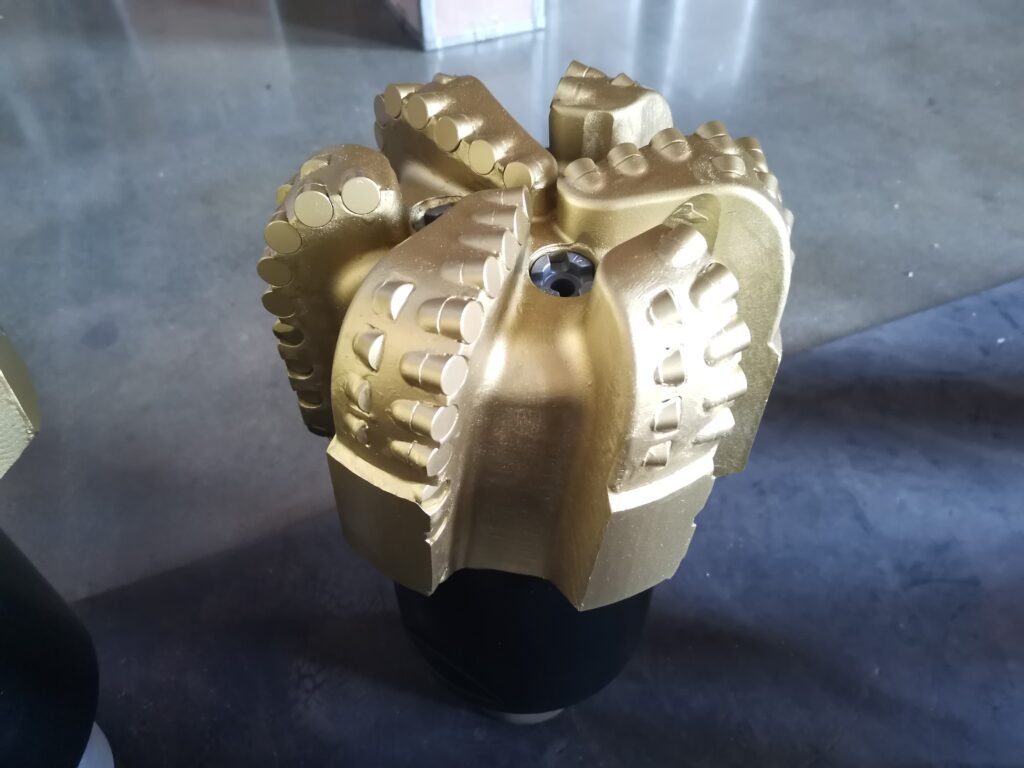
The bit pressure drop follows ΔP = ρQ² / (10858 × TFA²), where ρ is mud weight in ppg. Hydraulic horsepower is HHP = Q × ΔP / 1714, and HSI is HHP divided by the bit area in square inches.
Those equations are not academic: they tell you whether a nozzle change will actually improve cleaning or simply raise the standpipe pressure.
What good looks like
| Bit type | Typical HSI | Notes |
|---|---|---|
| PDC | 2.5–5.0 | Higher end in soft, sticky formations |
| Tricone | 2.0–4.0 | Enough to clear the cones and cool the bearings |
| DTH (air) | Not applicable | Volume, not pressure drop, drives cleaning |
Below 2 HSI in soft clay, balling is likely. Above 5 HSI in abrasive sandstone, the body may erode faster than the extra power gains penetration. The window moves with mud weight, ROP and formation, so treat the numbers as a starting range, not a target.
Nozzle layout
Symmetry matters more than individual size. Two large nozzles on one side and one small on the other create an unbalanced flow that can push the bit sideways and wear the gauge. Use equal nozzles unless the bit is designed for a blank, and check that the jets point at the cutters, not the wall.
Nozzle count as well as nozzle size
Three nozzles are the default because they give a balanced flow with enough total area. Two nozzles raise the velocity for the same TFA but concentrate the flow on two points; four or more spread it across the face and suit large bits with wide junk slots. The count should follow the bit design, not the spare nozzles in the toolbox.
A common mistake is to shrink the nozzles to raise standpipe pressure. That increases ΔP and HSI, but it also raises the velocity at the jet and the erosion on the body. If the hole is dirty, add flow or open the TFA; do not simply choke the bit.
Symptoms and fixes
| Symptom | Likely cause | Action |
|---|---|---|
| Bit balling, torque spikes | Low HSI, sticky formation | Increase TFA or flow |
| Eroded junk slots | Excessive velocity, abrasive mud | Reduce TFA, improve filtration |
| Broken cutters | Impact or excessive HSI | Check formation and nozzle aim |
| Slow ROP with a clean bit | Not enough power at the bit | Review flow and TFA |
| Gauge wear on one side | Unbalanced flow or BHA | Check nozzle symmetry and stabilisation |
Air and DTH
In air drilling the rules change. The compressor’s volume, not pressure drop, lifts the cuttings; a DTH bit with too little air re-drills its own cuttings and the buttons polish. Follow the hammer’s volume chart first, then choose the bit’s flushing holes for wet or dry ground.
Mud weight matters because pressure drop is proportional to density. A 12 ppg mud produces about 20% more ΔP than a 10 ppg mud at the same flow and TFA, which is why a nozzle set that worked on one well can overload the pump on the next. Recalculate when the mud weight changes, not only when the bit changes.
A worked example
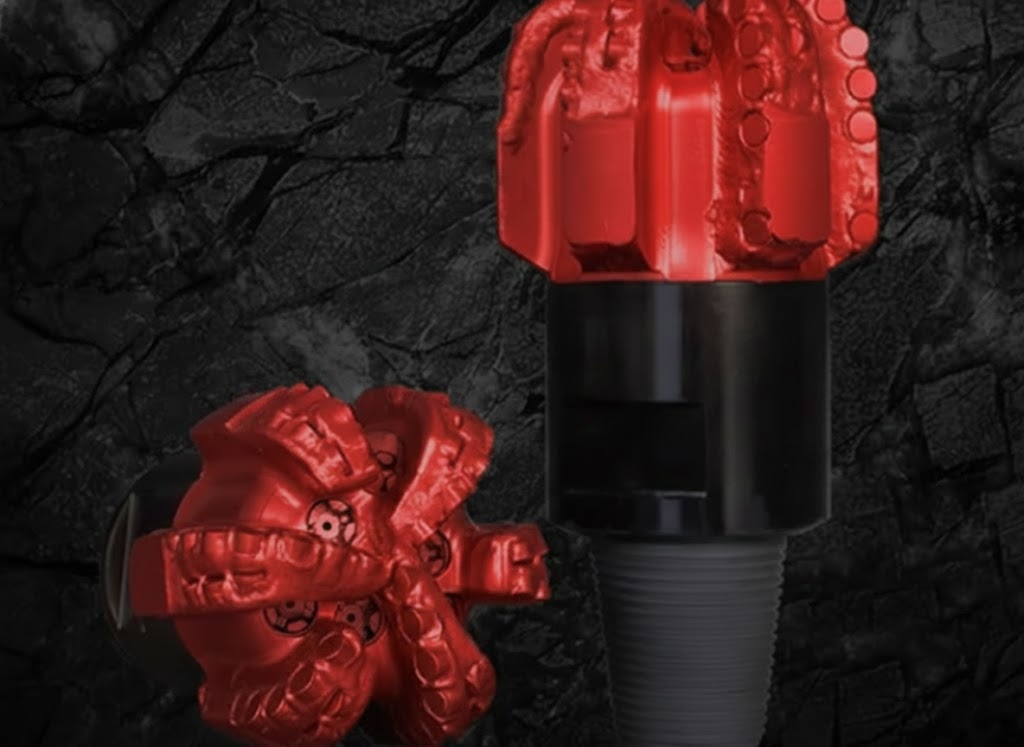
An 8 1/2-inch PDC bit, 450 gpm, 10 ppg mud and three 14/32 nozzles: TFA = 0.451 in², ΔP ≈ 917 psi, HHP ≈ 241, HSI ≈ 4.3. That is a healthy number for medium-hard sandstone. Change to three 12/32 nozzles and TFA falls to 0.331 in²: ΔP rises to about 1,700 psi and HSI to about 8, which is more likely to erode the body than to help.
Before you change nozzles
- Confirm the pump liner and the relief valve setting.
- Read standpipe pressure with the bit off bottom.
- Check nozzle erosion: a washed nozzle changes TFA without warning.
- Check the filters and the mud programme.
- Inspect the bit body for erosion before adding more power.
- Match the change to the formation, not to the last well.
We supply PDC bits and tricone bits with nozzle layouts to suit your flow, and DTH bits matched to the hammer and compressor. Send the bit size, pump output and mud weight and we will recommend a TFA.
Send your hole size, formation and rig details — we reply within 6 hours on working days.
Need Help Choosing?
Send your hole size, formation and rig details — we reply within 6 hours on working days.
Read More
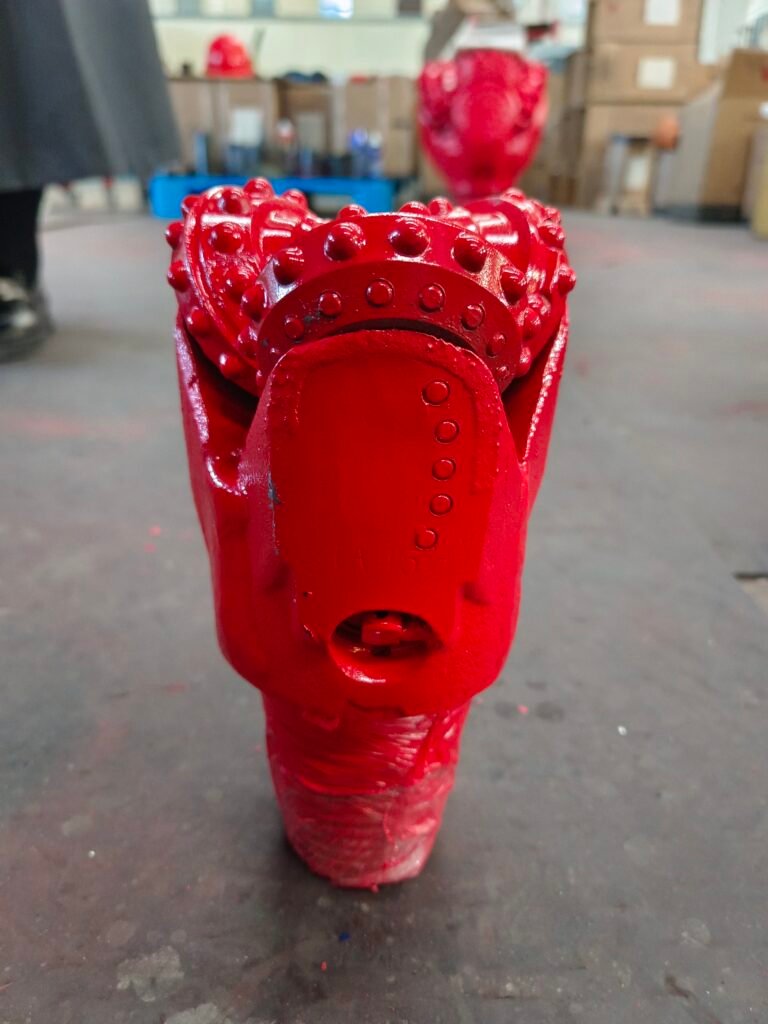
Why Tricone Bit Bearings Fail (and How to Prevent It)
Most tricone bits fail at the bearing, not the teeth. Four failure modes, what the pulled bit tells you, and t...
Read More →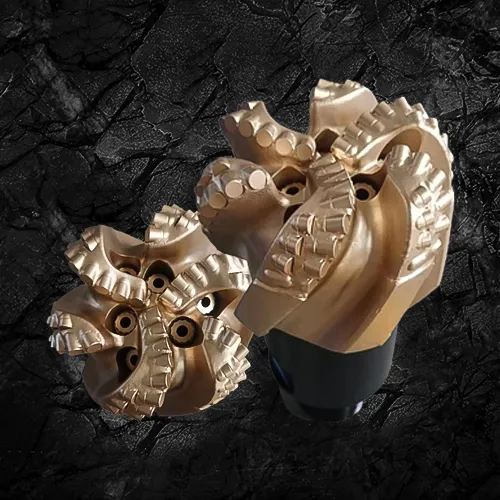
PDC vs Tricone Bits: Which One Should You Run?
PDC cuts faster, tricone survives tougher ground. A practical comparison of cutting action, cost per metre and...
Read More →
How to Choose the Right IADC Code for Tricone Bits
IADC codes define formation, cutting structure and bearing. Read the three digits correctly and spec the right...
Read More →