
A pilot hole is a promise; the reamer is what turns it into a pipeline. Most HDD problems blamed on the rig trace back to a reamer that was the wrong type for the ground, or the right type run at the wrong diameter.
The five families
| Reamer | Ground | Typical role | Watch |
|---|---|---|---|
| Barrel | Soil, mixed | Final pass in stable ground | Closed body, large diameter |
| Fly cutter | Mixed with cobbles | Rough reaming | Open body, replaceable teeth |
| Fluted | Soft clay, sand | High-flow reaming | Spiral flutes, low torque |
| Stack plate | Mixed, large diameter | Staged opening | Plates share the load |
| Rock / PDC | Limestone, sandstone | Rock crossings | TCI or PDC cutters |
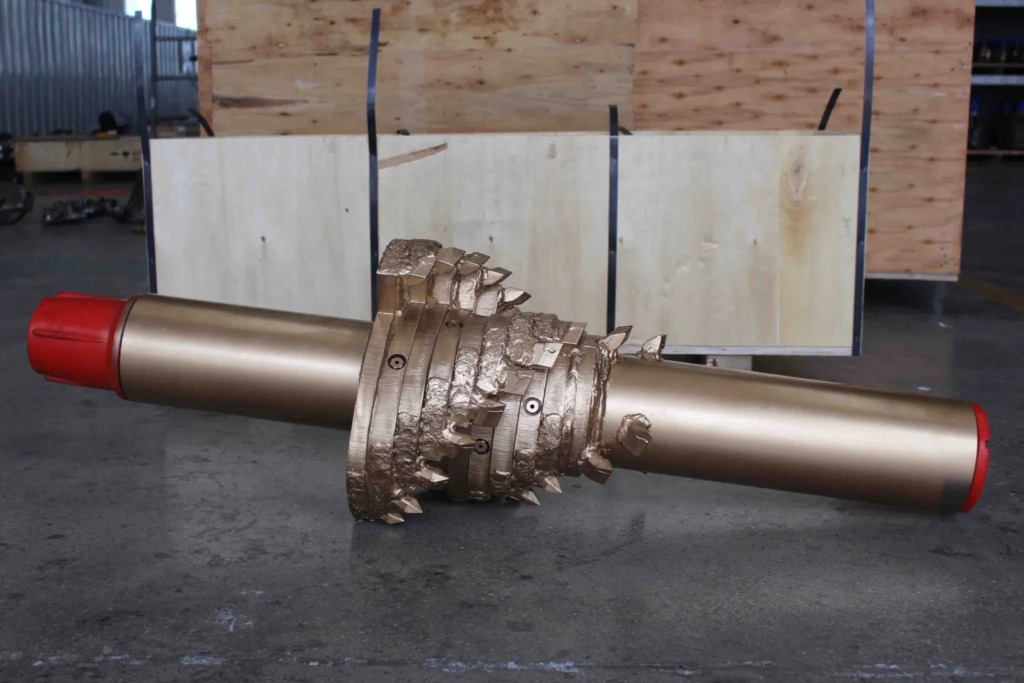
Barrel reamer
The barrel reamer is a closed, drum-shaped body with cutters on the face. It supports the bore and produces a round hole, which is why it is the default for the final pass in stable soil. In sand and clay it works well; in hard rock the body wears and the cutters take impact. A barrel reamer is not a rock tool, however heavy it looks.
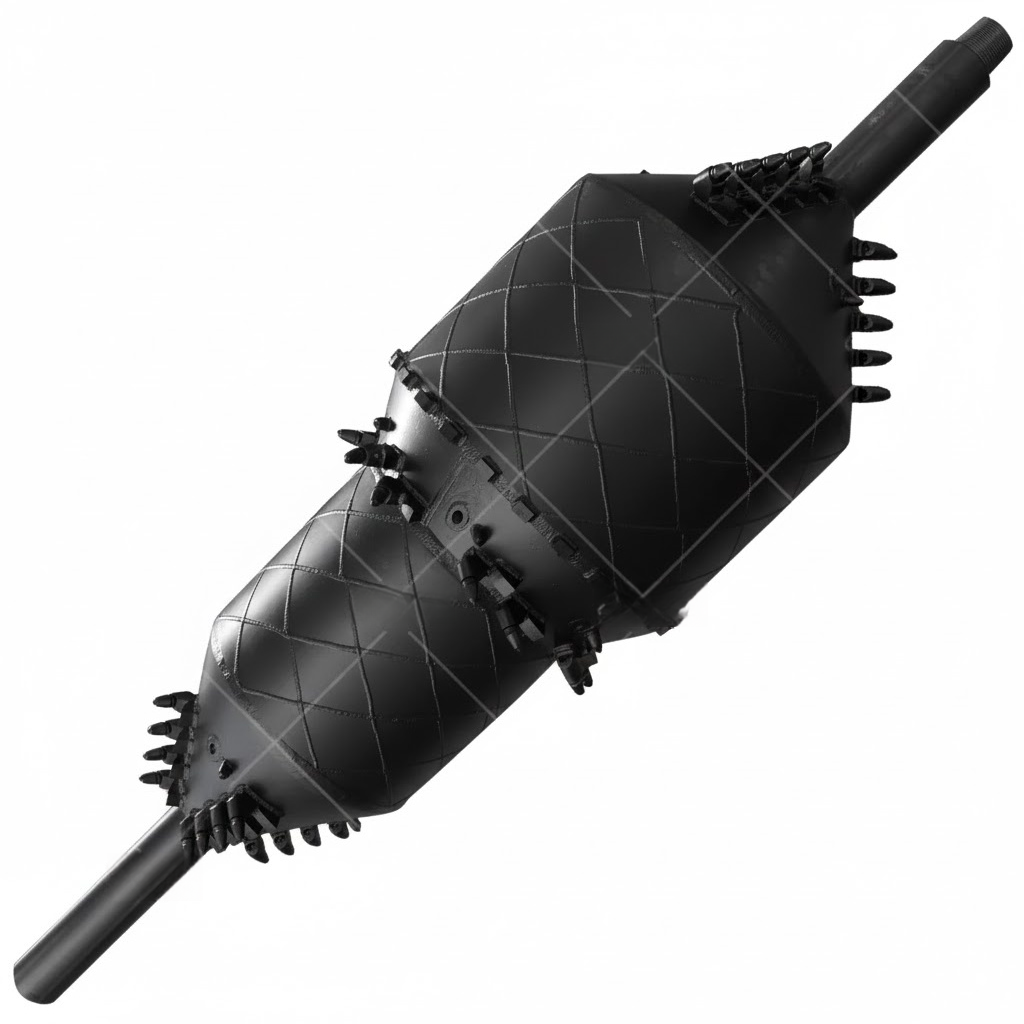
Fly cutter
The fly cutter is an open-body tool with replaceable arms and carbide teeth. It is the choice for mixed ground with cobbles and soft rock, because the open design lets large cuttings pass. In swelling clay the same open body can ball; check the nozzles and the slurry programme before blaming the tool.
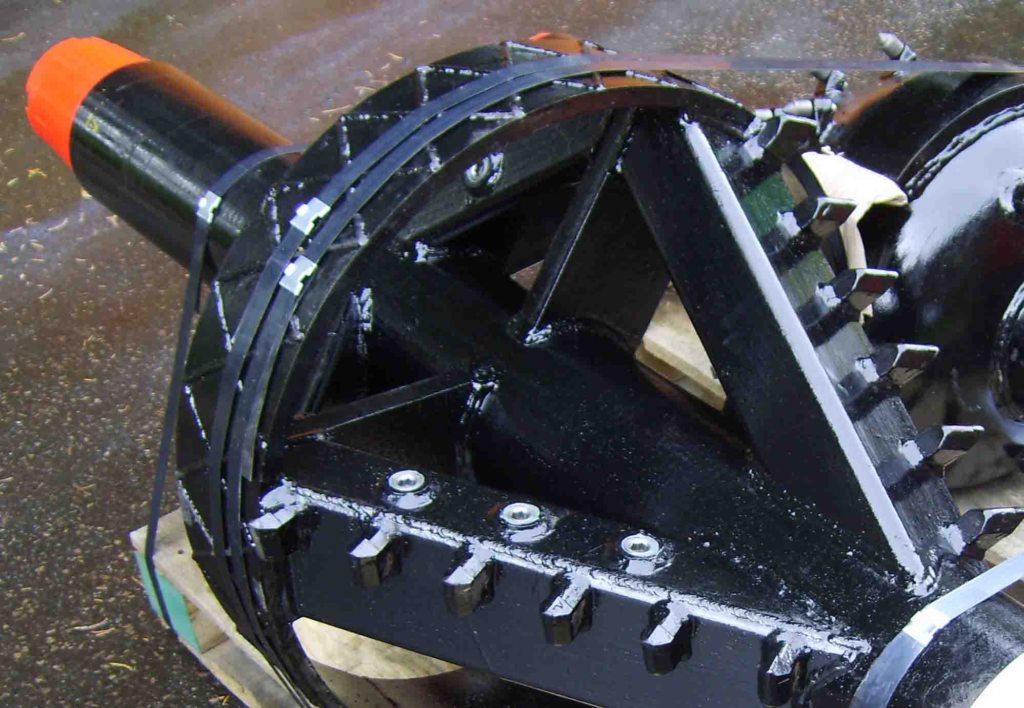
Fluted reamer
Spiral flutes move slurry and cuttings away from the face with low torque. That makes the fluted reamer efficient in soft clay and sand, and the wrong tool in rock or gravel with cobbles, where the flutes wear and the body deflects.
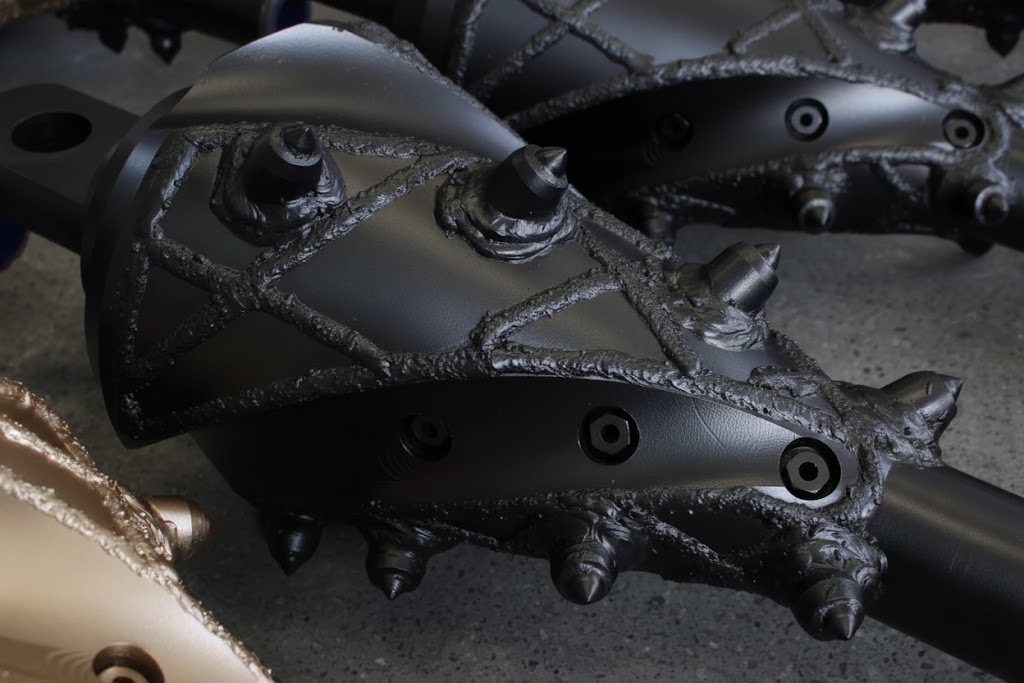
Stack plate reamer
Stack plate reamers open a large diameter in stages, with several plates sharing the load. They suit large utility crossings and mixed ground where a single large face would demand more torque than the rig can deliver. Check plate spacing and cutter condition; a worn leading plate drills a tapered hole that the following plates have to correct.
Rock reamer and PDC hole opener
For limestone, sandstone and hard rock, use a rock reamer with TCI cutters or a PDC hole opener. PDC cuts faster in homogeneous rock but is less tolerant of impact; TCI survives cobbles and broken ground. Match the cutter type to the rock, not to the price list.
Pilot hole and pass sequence
A reamer follows the pilot hole; it does not correct it. If the pilot is out of line, the reamer will open a crooked hole and the product pipe will follow the curve. Drill the pilot straight, survey it, and only then choose the reamer diameter.
Plan the passes by rig capacity, not by the finished diameter alone. A typical sequence opens the hole in steps, with each pass cleaning the cuttings left by the previous one. Skipping a pass may look cheaper until the reamer balls or the pullback stalls.
Matching the reamer to the rig
Pullback force, torque, mud volume and drill pipe size all limit reamer diameter. A 600 mm reamer on a 20-tonne rig is a different proposition from the same tool on a 100-tonne rig. The swivel and the drill pipe have to carry the load, and the mud pump has to keep the face clean at the lower penetration rate of a large reamer.
Slurry is part of the tool. The reamer can only cut what the mud can carry; if the annulus velocity is too low, cuttings settle behind the reamer and the next pass starts in a bed of spoil. Check the pump output against the hole diameter and the cuttings load before increasing reamer size.
Failure modes
| Symptom | Cause | Fix |
|---|---|---|
| Balling | Sticky clay, low flow | Increase flow, change reamer |
| Cutter loss | Impact, poor welding | Inspect and replace teeth |
| Body wear | Abrasion | Hardfacing, barrel change |
| Vibration | Unbalanced cutters | Check symmetry and alignment |
| Tapered hole | Worn leading plate | Replace plates |
Selection checklist
- Ground type and cobble content, not just hardness.
- Finished diameter and the number of passes.
- Pullback and torque available at the rig.
- Mud volume and the cuttings the pump can lift.
- Swivel and drill pipe rated for the load.
- Cutter type matched to rock or soil.
We make barrel reamers, fly cutters, fluted reamers, stack plate reamers and hole openers. Send the ground conditions, finished diameter and rig pullback and we will recommend the reamer and the pass sequence.
Send your hole size, formation and rig details — we reply within 6 hours on working days.
Need Help Choosing?
Send your hole size, formation and rig details — we reply within 6 hours on working days.
Read More
Why Tricone Bit Bearings Fail (and How to Prevent It)
Most tricone bits fail at the bearing, not the teeth. Four failure modes, what the pulled bit tells you, and t...
Read More →
PDC vs Tricone Bits: Which One Should You Run?
PDC cuts faster, tricone survives tougher ground. A practical comparison of cutting action, cost per metre and...
Read More →
How to Choose the Right IADC Code for Tricone Bits
IADC codes define formation, cutting structure and bearing. Read the three digits correctly and spec the right...
Read More →