
Water well drilling punishes general-purpose bits. The ground changes every few metres, the rig is often small, and a stuck casing costs more than the bit. The right bit is the one that matches the formation in front of it, not the one that worked on the last hole.
Method first
Mud rotary and air/DTH use different bits and different hole cleaning. In mud rotary the bit cuts and the mud lifts; in air drilling the hammer impacts and the air lifts. A DTH bit in a mud string is expensive scrap waiting to happen; a drag bit in a hard rock air hole will not make hole.
Air or mud?
Air/DTH is faster in hard rock and avoids water-sensitive shale problems, but it needs a compressor with enough volume and a hole that stays dry. Mud rotary handles sand, gravel and clay better and cools the bit, but the mud can ball a bit in sticky clay and the pump has to lift the cuttings. Choose the method for the ground, then the bit for the method.
The formation table
| Formation | Best bit | IADC / type | Notes |
|---|---|---|---|
| Clay, silt | Drag bit or steel tooth tricone | 111–117 | High ROP; watch balling |
| Sand, gravel | Carbide drag bit or TCI tricone | 417–437 | Abrasive; control flow |
| Soft shale | Steel tooth tricone | 117–127 | Water-sensitive; keep clean |
| Sandstone | TCI tricone or PDC | 437–517 | PDC fast if homogeneous |
| Limestone | TCI tricone | 517–617 | Hardness decides the code |
| Granite, basalt | TCI tricone or DTH | 637–737 | Abrasive; protect gauge |
| Overburden with casing | Casing system | ODEX or similar | Drill and case together |
Soft clay and silt
Drag bits and steel tooth tricone bits give the highest penetration rate in clay and silt. The limit is usually balling, not wear: keep the face clean, control the mud weight and do not crowd the bit. A 111 or 117 steel tooth bit is cheap and fast; a TCI bit is wasted here.
Sand and gravel
Sand is abrasive and gravel is impact. A carbide drag bit or a 417/437 TCI tricone handles both, but flow control matters: too much flow washes out the hole, too little leaves gravel on the bottom. Case the hole promptly; gravel does not stay open.
Shale
Water-sensitive shale swells and balls a bit. Use a steel tooth 127 with good hydraulics, or a PDC bit with few large cutters and open junk slots. If torque climbs without a change in formation, the bit is balling, not dull.
Sandstone and limestone
Sandstone suits TCI 437/517; limestone moves from 517 to 617 as hardness rises. PDC bits are fast in homogeneous sandstone and limestone but vulnerable to chert and chert nodules. If the formation is interbedded, a TCI bit is the safer purchase.
Granite, basalt and quartzite
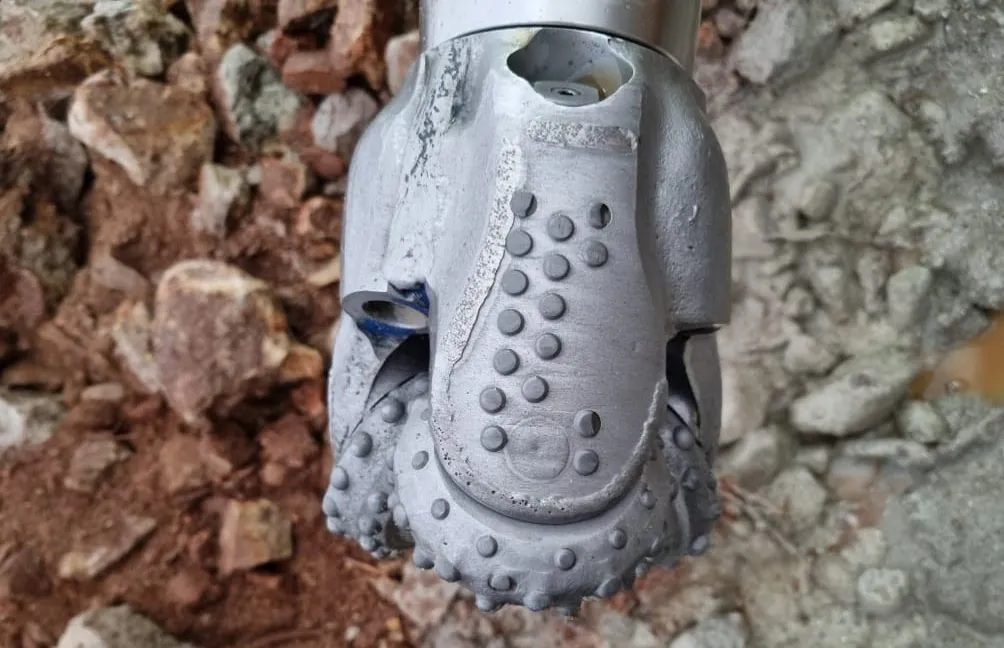
Hard abrasive rock calls for TCI 637/737 or a DTH button bit. Button shape and gauge protection decide life; a cheap bit that loses gauge costs more in reaming than it saved on the invoice.
In granite, a DTH hammer usually beats a rotary tricone on penetration rate, but the compressor and the hole diameter have to suit the hammer. If the hole is large and the rig is small, a rotary tricone with a lower air package may be the only practical option.
Diameter and completion
Bit diameter follows the casing and the annulus, not the rig. A 6-inch hole for 4-inch casing leaves 1 inch of radial clearance, enough for gravel pack and cement but not for a crooked hole. If the formation tends to close, drill one size larger or plan a reaming pass.
Casing, gravel pack and completion
The bit has to leave a hole the completion can use. Casing diameter plus coupling, gravel pack thickness and cement volume set the minimum hole size, and the bit has to hold that size to total depth. A bit that starts at 6 inches and finishes at 5 3/4 inches may still pass a casing string, but it will not leave the annulus the gravel pack was designed for.
Cost per metre
Compare bits on metres drilled, including reaming, stuck casing and rig time, not on invoice price. A drag bit that drills 200 m in clay is cheaper than a TCI bit that drills 300 m but costs three times as much.
Keep one bit size per hole and avoid mixing worn and new bits in the same string. A worn bit drills a smaller hole, and the next bit has to ream it before it can cut new ground.
We stock tricone bits, steel tooth bits, TCI bits, drag bits and water well drill pipe. Tell us the formation sequence and casing programme and we will map the bits to the hole.
Send your hole size, formation and rig details — we reply within 6 hours on working days.
Need Help Choosing?
Send your hole size, formation and rig details — we reply within 6 hours on working days.
Read More
Why Tricone Bit Bearings Fail (and How to Prevent It)
Most tricone bits fail at the bearing, not the teeth. Four failure modes, what the pulled bit tells you, and t...
Read More →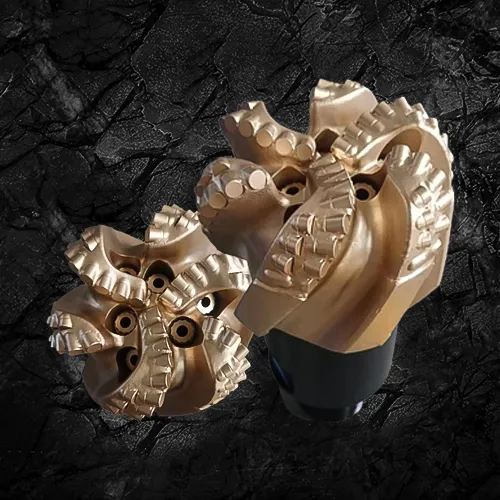
PDC vs Tricone Bits: Which One Should You Run?
PDC cuts faster, tricone survives tougher ground. A practical comparison of cutting action, cost per metre and...
Read More →
How to Choose the Right IADC Code for Tricone Bits
IADC codes define formation, cutting structure and bearing. Read the three digits correctly and spec the right...
Read More →